
Thought leadership
The new FDI map: the rise of investment blocs in a fragmenting world
As geopolitical rivalries intensify, the global economy is increasingly described as fragmenting into competing blocs. But rather than retreating, foreign direct investment is being reshaped – revealing how capital is adjusting to a more divided, strategically driven world.
- February 26, 2026
-
By Glenn Barklie and Jonathan Wildsmith
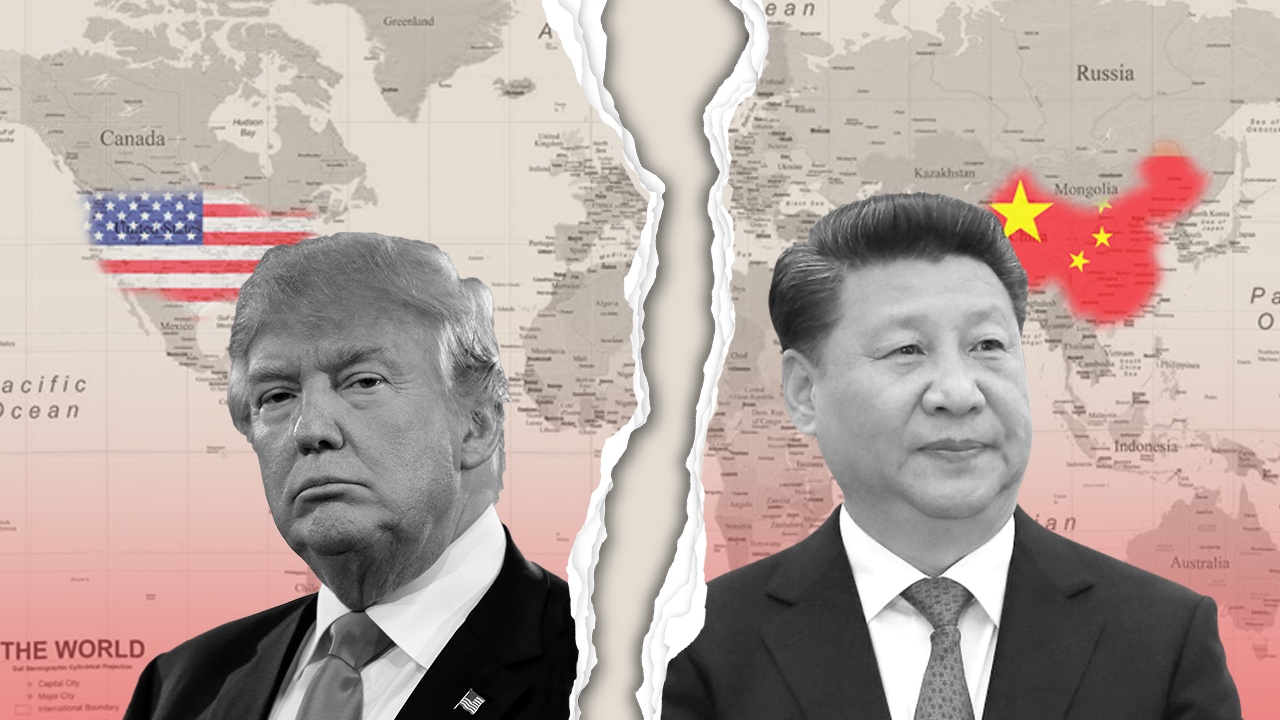
How is the world splitting geopolitically?
Based on analysis from Neil Spearing’s The Fractured Age: How the Return of Geopolitics Will Splinter the Global Economy, with some further revisions of our own denoting more recent developments, we break down the global economy into 3 major blocs – the US Bloc, China Bloc and unaligned countries. Within the US and China groupings, we distinguish between close allies and countries that lean towards one power without being firmly aligned. In total, 100 countries fall within the US bloc, 81 within the China bloc, and 23 remain unaligned, seeking to balance relations with both.
Breakdown of global countries by geopolitical alliance
A majority of countries now align with either the US or China bloc, highlighting a more divided global landscape.
A fundamental assertion from Neil Spearing is that the global economy is not deglobalising, despite a strong narrative to the contrary, but rather it is reorganising along geopolitical lines.
Writing in the Financial Times, Martin Wolf summarises the key findings from the book, identifying that:
- The US and its historic allies are a far bigger bloc, economically, than the China Bloc
- World population numbers are in China’s favour
- The countries allied to the US are the world’s richest
- Half of global trade in goods is within the US bloc
- US effective tariff rates have been very high on China, but also have increased considerably on its ‘friends’
In this analysis, we examine how greenfield foreign direct investment is distributed across these blocs.
How is FDI split between the major blocs?
The US bloc attracts the largest share of inbound FDI. Between 2015 and 2025, it accounted for an average 57 per cent of global FDI capital investment, compared with 20 per cent for the China bloc and 23 per cent for unaligned countries.
Most global FDI now flows into the US aligned bloc.
The US share peaked at 71 per cent in 2021. Although it declined in 2022 and 2023, more recent data point to a recovery, with provisional figures for 2025 suggesting a return towards that earlier high.
Intra-bloc FDI
Around 86 per cent of FDI into the US bloc originates within the bloc itself. In other words, most capital flows between its own members. This reflects long-standing economic ties, geographic proximity and the concentration of advanced, high-income economies within the group.
The pattern is markedly different for the China bloc. Only 21 per cent of inbound FDI comes from within the bloc, indicating greater reliance on external sources of capital. The bloc includes a higher share of emerging and developing economies, and many of its formal economic relationships are more recent.
Over the past decade, the US bloc has accounted for roughly 60 per cent of total FDI into the China bloc. In 2025, however, that share fell to 46 per cent, while intra-China bloc flows rose to around one-third of total inflows, compared with a ten-year average of 21 per cent. If sustained, this would suggest a gradual rebalancing of capital flows within the China bloc.
Which countries are the dominant markets in each bloc?
The ten largest destination markets account for about 60 per cent of global FDI capital investment in 2025. Seven of these are aligned with the US, while the remaining three are unaligned. None are clearly aligned with the China bloc.
Within the US bloc, the US, France and the UK rank as the leading destinations. Among unaligned countries, India, Brazil and the UAE attract the most capital. China ranks 18th overall. Of the more China leaning economies, only Kazakhstan (12th) and Egypt (26th) feature in the top 30.
The US and China are also diverging in their broader FDI profiles. The US is moving closer to a balance between inbound and outbound investment. According to fDi Intelligence’s Trump Tracker, outbound projects accounted for 80 per cent of total US FDI activity (inbound plus outbound) in 2003; by 2025 that share had fallen to 60 per cent. China has moved in the opposite direction. Inbound projects accounted for 90 per cent of its total FDI activity in 2003, but just 34 per cent in 2025. The shift reflects its growing role as a source of overseas investment as well as a decline in its appeal as a destination.
The importance of strong/leaning nations
The US bloc comprises more countries than the China bloc (100 compared with 81) and is more economically integrated. This is reflected in the source of its investment. Over the past decade, around 80 per cent of FDI into the US bloc has come from the 58 countries classified as having a strong alignment with the US.
The pattern is different for the China bloc. The 48 countries identified as having a strong relationship with China account for about 20 per cent of FDI into the China bloc. The 33 countries that lean towards China contribute roughly 1 per cent of inflows. By comparison, the 42 countries that lean towards the US account for about 6 per cent of FDI into the US bloc.
Overall, intra-FDI in both blocs is concentrated among their closest partners. However, the US bloc not only attracts a larger volume of capital, but that capital is more heavily sourced from strongly aligned economies. By contrast, the China bloc continues to rely to a significant extent on investment originating outside its bloc, primarily in US aligned countries.
Strategically sensitive FDI within each bloc
Strategically sensitive FDI investment in sectors deemed critical to national security, economic resilience or geopolitical influence has risen sharply since 2022. Between 2016 and 2019, announced FDI in these industries averaged an estimated $446bn a year. From 2022 to 2025, that figure more than doubled to around $970bn annually.
US bloc dominates strategically sensitive FDI
The distribution of this investment has also shifted. The US bloc now accounts for a record share of global strategically sensitive FDI, with provisional 2025 data indicating it receives about 71 per cent of the total. Much of this reflects intra-bloc flows, though investment from unaligned countries into the US bloc has also increased. By contrast, inflows into the China bloc have fallen markedly, largely owing to a sharp reduction in investment from US aligned economies.
Unaligned countries have accounted for a broadly stable share of global strategically sensitive FDI over time. Since 2020, however, their share has exceeded that of the China bloc. Taken together, the decline in China’s role as a manufacturing base for US aligned companies and the concentration of sensitive investment within the US bloc point to a clearer alignment of capital with geopolitical ties. Even so, wider geopolitical relationships remain more fluid than these investment patterns alone might suggest.
Muddy waters
Despite the appearance of fixed alliances, alignments are often less clear-cut. Argentina joined China’s Belt and Road Initiative but turned to the US and the IMF during its financial crisis. India has deepened ties with Washington while continuing to buy discounted Russian oil. At the time of writing, US President Donald Trump has said tariffs on Indian goods would fall to 18 per cent after India agreed to halt those purchases. New Delhi has neither confirmed nor denied that account.
Mexico presents a sharper test case. As Chinese manufacturers expanded their Mexican investments to serve the US market, scrutiny from Washington has intensified. FDI screening of Chinese investments, particularly in sensitive sectors, has been tightening for years, most notably across Europe and the US. The US is now seeking to extend its sphere of influence, tying down closer coordination across trading partners. In September 2025, US legislators introduced the Protecting the USMCA from Harmful Chinese Investment Act, aimed at coordinated North American screening. In December 2025, Mexico announced tariff increases on China and other countries without free trade agreements with Mexico. The move was widely interpreted as an attempt to placate President Trump, whose administration has framed its trade policy around balancing trade deficits and protecting domestic industries.
US security and trade policy has added further ambiguity. Under a second Trump administration, tariffs have extended beyond rivals to traditional partners. A baseline duty on imports and higher “reciprocal” tariffs on allies have blurred the distinction between friend and foe, introducing greater uncertainty.
This has exposed strains within the US bloc. UK Prime Minister Sir Keir Starmer’s outreach to Beijing and pragmatic engagement by Canada have drawn criticism from Washington. In early 2026, threats to impose tariffs of up to 25 per cent on European NATO members over disagreements on Greenland underscored how economic instruments are being used in geopolitical disputes. These moves have heightened uncertainty among US allies, prompting calls in Europe and Canada for greater strategic autonomy and more diversified economic partnerships. That, in turn, has complicated efforts to maintain unified positions on issues such as Ukraine and Arctic security.
On Friday, 20 February 2026, the US Supreme Court ruled that elements of President Trump’s tariff regime were unlawful. Since the announcement, President Trump moved swiftly to introduce a 15 per cent rate, with partners like the UK, for the meantime, facing a higher tariff rate, while China, Brazil, India, Canada and Mexico are all now seeing a lower rate. This latest episode leaves allies and markets facing renewed uncertainty, as previously announced “napkin” trade agreements are being overwritten and product exemptions are unclear.
China too large to ignore, the US harder to read
China remains central to global trade and manufacturing. It is a leading exporter of electric vehicles, batteries and clean technologies, underpinned by dominance in critical minerals and sustained growth in scientific output and applied research. In 2025, goods exports reached roughly $3.8tn, with the US still its largest single market.
China’s GDP has undergone a massive transformation in the last 50 years, shifting from a poor, closed agricultural economy to the world’s second-largest economy by GDP, growing from under $300bn in the 1970s to over $19tn in 2025. China has seen decades of annual growth, transitioning to a modern, high-tech, and urbanised industrial powerhouse. Its economy has proved resilient despite property stress and external pressures, continuing to be a significant driver of global growth; China’s economy expanded by 5 per cent in 2025, and the IMF projects 4.5 per cent growth in 2026.
Its technology capacity is also expanding. Chinese universities awarded more than 50,000 STEM PhDs in 2022, compared with almost 34,000 in the US, according to analysis by fDi Intelligence’s Alex Irwin-Hunt. Also, China now produces a greater volume of research in several strategic fields, including AI and computer science. While US institutions still outperform on average in research quality and citations, the gap in talent production is widening. At a time when innovation underpins competitiveness in semiconductors, EVs, and clean technologies, this has long-term implications.
Even countries firmly aligned with the US continue to trade heavily with China. The UK imported $85.2bn worth of goods from China in 2025, up 8 per cent year-on-year, according to data from ITC Trade Map. Similar patterns are visible across Europe. Germany imported $118.3bn of Chinese goods last year, up roughly 10 per cent from 2024, while imports into Italy and France rose by around 11 per cent and 8 per cent, respectively.
Trade is also being rerouted. Vietnam, India and Mexico rank amongst China’s largest trading partners and have become important manufacturing or assembly hubs, incorporating Chinese inputs before goods ultimately reach Western markets. Fragmentation is therefore redirecting supply chains rather than dismantling them.
China’s economic weight, then, remains substantial. US policy, on the other hand, has become harder to predict. Trade and security are increasingly used as instruments of leverage, not only against rivals but with allies.
FDI is being reshaped rather than deglobalised
The evidence suggests that globalisation is not unravelling, it is being reshaped. Capital is flowing with greater regard to geopolitical alignment, particularly in strategically sensitive sectors, where investment is increasingly concentrated within the US bloc. The China bloc, while still deeply integrated into global trade and manufacturing, is seeing shifts in both the origin and destination of FDI, alongside a gradual rise in intra-bloc flows.
Yet the picture is far from binary. Unaligned countries remain pivotal, supply chains are being rerouted rather than dismantled, and even close US allies continue to trade heavily with China. Economic scale and technological capacity make it too significant to sideline, while US policy unpredictability has introduced new uncertainties into traditional alliances.
Rather than a clean geopolitical split, the global economy appears to be entering a more complex, multipolar phase, one in which investment decisions are shaped as much by strategic considerations as by market fundamentals.
Further reading
The Fractured Age: How the Return of Geopolitics Will Splinter the Global Economy
FT | The fracturing of the world economy by Martin Wolf
fDi Intelligence | Trump tracker
Protecting the USMCA from Harmful Chinese Investment Act
FT | UK Prime Minister Sir Keir Starmer’s outreach to Beijing
fDi Intelligence | China’s universities outpace US peers amid tech competition
Learn more about FT Locations
FT Locations is the world's most comprehensive and trusted provider of investment promotion and economic development data and digital solutions for the foreign and domestic direct investment industry.

