
Product update
The impact of tariffs on investment into the US
President Trump’s renewed tariff agenda is reshaping how global companies approach international investment. Drawing on fDi Markets new tariff feature, the piece explores shifting corporate strategies and sectoral responses. With trade tensions rising, questions remain about the longer-term impact on global investment patterns.
- September 25, 2025
-
By Sophie Lewis
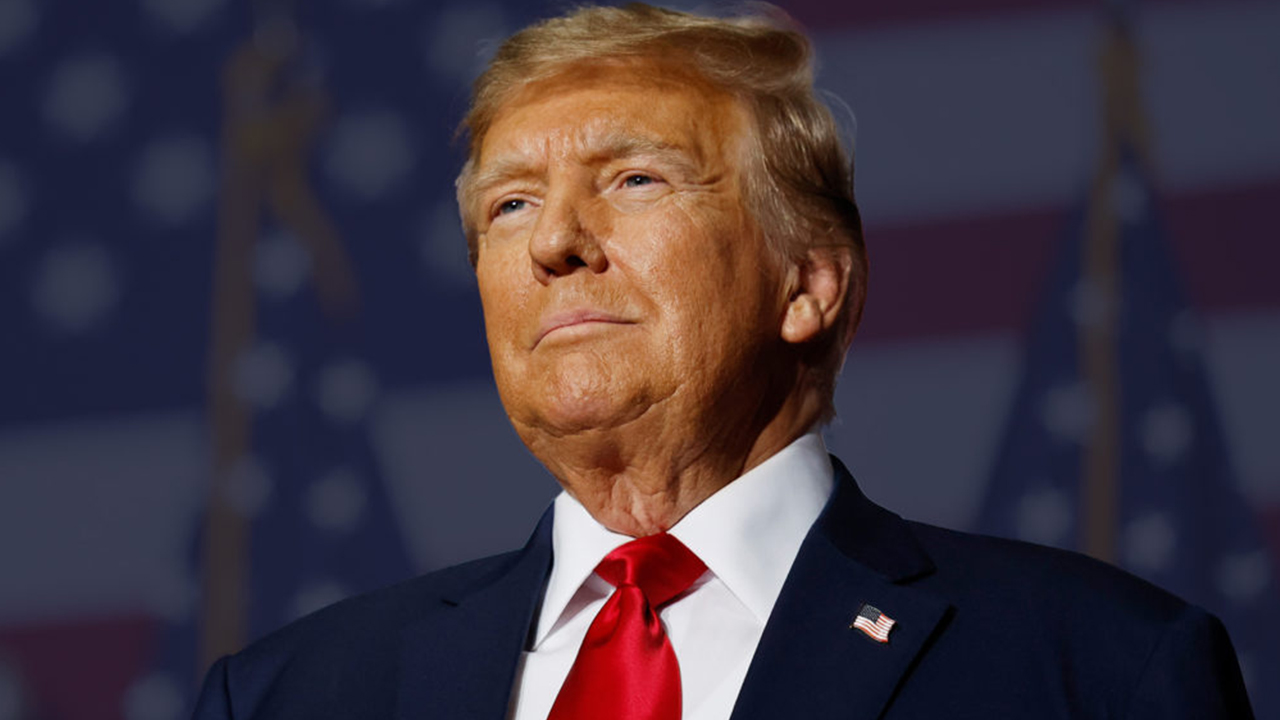
President Donald Trump, 2025
During President Trump’s 2024 election campaign, promises to reinstate tariffs featured heavily, with initial tariffs threatened predominantly on China, Mexico and Canada. Tariffs and protectionist policies in his second term were to be expected given the trade war with China in his first term.
In April 2025, the “Liberation Day” reciprocal tariffs saw a series of steep levies imposed, affecting nearly all imported goods into the US, adversely affecting a multitude of industries and countries. Subsequently, many companies have had to pivot their international investment strategies to account for these increased costs and high levels of uncertainty.
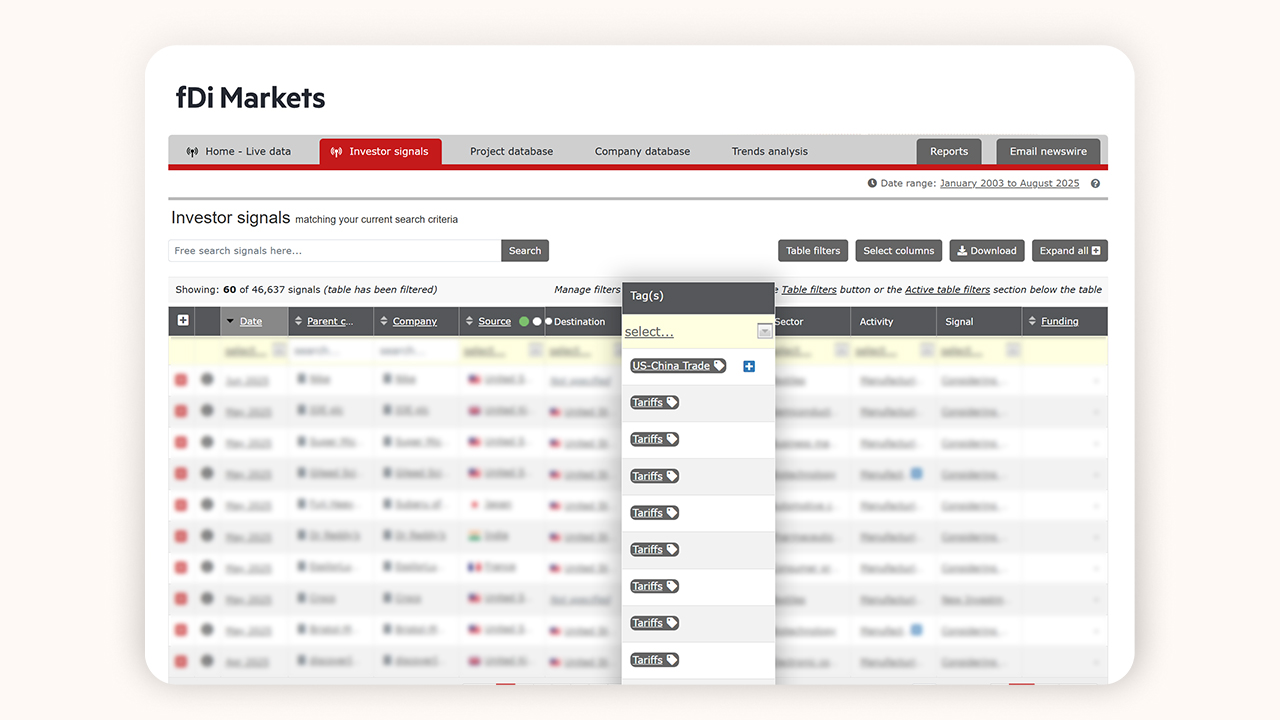
fDi Markets new tariff tag feature
Track the tariff impact on FDI
fDi Markets, the leading online database tracking greenfield investment data records Investor Signals, which are defined as early warning signals that a company may be expanding internationally. Investor Signals are recorded in tandem with greenfield projects, which are announced projects.
In August, fDi Markets released their latest feature which now identifies projects and signals which have been announced in response to a government-imposed tariff on goods and services affecting the investor’s supply chain or market access. With the reciprocal tariff calculations focusing heavily on imposing tariffs on countries importing goods to the US, fDi Markets recorded an exponential increase in companies both signalling and confirming investment into the US.
Impact of Trump’s tariffs on investment into the US
Current situation
A total of 38 tariff-related Investor Signals targeting the US were identified between November 2024 to July 2025, and of these, 36 of the companies stated they were considering investment in production and manufacturing operations in the US in response to the tariffs.
Over one-fifth of these announcements (21.8%) were classified within the life sciences cluster, across sectors such as Pharmaceuticals and Biotechnology. Two major Indian pharmaceutical companies, Cipla and Glenmark Pharmaceuticals, both expressed interest in increasing their manufacturing footprint in the US in response to President Trump’s tariffs.
Over one-fifth of these announcements (21.8%) were classified within the life sciences cluster, across sectors such as Pharmaceuticals and Biotechnology. Two major Indian pharmaceutical companies, Cipla and Glenmark Pharmaceuticals, both expressed interest in increasing their manufacturing footprint in the US in response to President Trump’s tariffs.
Companies targeting the US and citing tariffs as a contributing factor
Additionally, 21.8% of these of companies expressing intent to expand in the US fell within the ICT and electronics cluster, across sectors such as Semiconductors and Communications. The number of announcements is expected to increase in the coming months as the White House moves to announce additional tariffs targeting semiconductors and chips.
Almost half of the companies signalling intent to locate or expand in the US were headquartered in Europe, with 9% of these companies being based in Italy. Popular coffee brands illycaffe and Luigi Lavazza among those signalling interest in expansion to the US.
At the time of writing, Switzerland faces one of the highest US tariff rates, at 39%. The country is home to major pharmaceutical companies such as Novartis and Roche, which have pledged $23bn and $50bn respectively in US investment by 2030. Although pharmaceuticals are currently exempt from tariffs, the White House has indicated that exemptions could be reassessed, creating added uncertainty for the sector. In light of these commitments, Swiss companies may increasingly view US investment as a strategic response to rising tariff risks.
What’s next?
It’s becoming apparent that global companies’ international investment strategies are changing to become more favourable in line with the US tariffs. US outward investments are also being cancelled as international announcements are becoming increasingly unviable. Intel and Broadcom have both cancelled European semiconductor projects in recent months.
With this in mind, will we see a further shift in the global FDI landscape, or will emerging trade agreements provide enough stability to rebalance global investment flows.
Interested in tracking which projects and investor signals are listing Tariffs as a driving factor in their investment decisions?
Learn more about fDi Markets or request a demo and an FT Locations expert in your region will contact you to schedule a 30-minute demonstration to get an in-depth look at the product.
Further reading
USITC - Switzerland US tariff data
Learn more about FT Locations
FT Locations is the world's most comprehensive and trusted provider of investment promotion and economic development data and digital solutions for the foreign and domestic direct investment industry.

